
Miller April 2026 Monthly Update
We took a wonderful walk at a new favorite walking path called the Black and Blue trail. Very lovely place!
Highly recommend you stop by at least once if you are in Colorado Springs!
----
This month, we learned quite a bit about our recovery period and how much rest we truly need. I napped a significant amount throughout the month—shifting from insomnia and sleeping very little a few months ago to needing sleep almost all the time. Some of it was by choice (like visiting my sister for the day), and some of it was not entirely by choice (possibly due to the effects of starting neurofeedback therapy). It’s been a lot of learning how to slow down and take care of ourselves.
Also, this is how we tend to crash. After a rough day, John is usually the first to collapse. I take care of everything for the next 24 hours. Then, for the following 24–48 hours, I’m basically nonfunctioning—or just asleep. Half of those days are spent sitting and staring at a wall, struggling to form a thought, let alone do anything. So we make adjustments around who will take over during those times.
That also doesn’t include the two days of preparation beforehand. To minimize the negative effects of a long day out, we usually spend the two days before it staying home and not going out at all. As you can see, it takes us about a week to recover from and prepare for just one day of socializing—and that might only be spending time with my little sister.
Socializing is very draining for us and takes a lot of emotional, mental, and physical energy. We have to keep this in mind to protect our health.
Even Sherlock has been happily napping wherever we are most of the time.
We’ve also been able to clean up the home more. There’s always a phase when moving where things get messier before they improve. I managed to condense our plastic totes down to about half, which still need to be dealt with at some point this year. Oh—and this month we actually got another lamp from the store! So now we have a little more light in the front. It’s still not quite bright enough yet, so we’ll need to keep an eye out for another one.
Both of us have been creating more art, tying into using art for emotional processing and relaxation. More on that later~
Quick update on events coming up this month:
May 10th – ATCs at Rainy Day Anime
May 29th – ATCs at Who Gives a SCRAP (Octopus Room)
Both events are free and run from 11am–1pm.
We’re keeping a lighter event schedule this month as Michelle goes through neurofeedback therapy and may be sleeping a lot.
Last month, we volunteered with Concrete Couch and a group hosting Skillshare Saturday with local kids and families from the downtown Colorado Springs area who are staying at the shelter. The kids had a blast making artist trading cards with us—which came second only to seeing the fire truck that stopped by. It was incredibly rewarding to see their excitement to create and simply be kids. I took care of the table most of the time and John was teaching another child how to draw roses, trees and other things in chalk on the stairs nearby.
We hope to participate with this group more in the future, depending on our capacity. The next one we may join is later in June, and we’re hoping to be up for it.
We experimented with a new tool and created these fun shaker cards!!
We also had our two ATC events this month! At the beginning of the month, we hosted our monthly craft event at Rainy Day Anime, making shaker cards using a new method. We were able to use some recycled plastic we had lying around to experiment with what worked best—it was quite a bit of fun.
I’m wanting to start emphasizing the trade portion of the event—encouraging people to bring their binders and trade their newest cards from the month, or simply join in to make new cards with the provided materials. We haven’t focused much on that aspect over the past few years, as we’ve mainly been encouraging people to learn about ATCs and create them. Now, I think we’re ready to lean more into the interaction and community-building side of things.
Made a silly ATC for my sister when we visited her. John and I love the ridiculous titles Isekai have been getting lately
where it seems like a sentence or paragraph than an Anime show title.
The second ATC event was at Who Gives a SCRAP, which occurs on the last Friday of every month. At our last event, we covered both shaker cards and scrap-tape ATCs, and we have an exciting idea planned for next month. We hope to see you there!
The Resource Exchange (TRE) is an organization that works with the disabled community, helping people access the care and connections they need. Both John and I use their services—John as a client seeking care, and me as his paid caregiver. We are also on the Art Committee, working to help more people learn about what they do.
For the past few years, TRE has hosted an art show and auction featuring work from many artists in our local disabled community. Other artists are also welcome to participate, with 50% of sales going toward supporting TRE and their operating costs.
They have done incredible work—putting in so much effort to ensure John continues receiving care and that I have a job that supports our basic needs. Over the past two years, they’ve truly proven how much they care for their clients, even going so far as to pay me for eight months while waiting for government approval and reimbursement.
If you or someone you know might be interested in participating, please let them know! Or perhaps you’d be more interested in purchasing art at the auction? Tickets will be available for viewing and accessibility to the artworks. If you’re looking to support the cause, there are also sponsorship tiers available starting as low as $250 to show your investment and support!
Sign up [HERE] to join as an artist!
With this approaching, both John and I are focusing on what art pieces we want to create and submit this year. If you’re interested in joining, please fill out the interest form. This isn’t a firm “I’M IN!”—just a way to let us know you’d like to be involved if possible.
-----
Next, we’re taking a step back from several groups. As I go through another layer of therapy, I’m unsure how much impact it will have—especially as I’m already struggling to carry a lot. Because of this, I’ll need to pause or step away from certain commitments.
This includes Christian Craft Fellowship, Fathers in the Field, and VBS 2026. Some may be more of a full stop—for example, VBS, since by the time I’m able to help again, it will likely already be over. For Fathers in the Field, we’ll remain open to helping when asked, and if we have the time and energy, we would love to support. But we can’t continue showing up every month and stretching ourselves thin when the need hasn’t been consistent or very present.
I’m trying very hard not to feel guilty about this. I’ve needed time to rest and take care of myself since I was a child. Now, I’m finally getting the help and resources I need. I’ve pushed myself through so much pain to help “just one more person”… and then another… to the point where I can’t help myself. My body is falling apart. So how can I help others when I can barely take care of myself? I need to rebuild my foundation and rediscover who I am. It may take a few months, but I believe the decades ahead of me will thrive because of this investment of time.
We rarely even have one day each month to go out and simply enjoy time off or spend time with people we care about. So last month, we made that a priority. Both of us love going to parks, but we’re often either too busy or in too much pain to make it happen. This year, we want to set aside one day each month just for ourselves—to slow down and enjoy nature.
We also got a fishing license this year, and we’d really like John to be able to use it. It’s been over five years since he was last able to fish with a license, even though he would love to go every week. So it feels like it’s finally time.
While he fishes, I get to sit in the lovely weather, look at rocks, or spend some time drawing.
---
Lastly, we have been creating! John has completed his full Postage Stamp Art set and is now working on finding ways to sell it. Aren't they so cool?! They are fully available in our shop now!
At home, he’s been getting into painting and working on some stunning art pieces you may see in the upcoming art show.
We’ve been talking about—okay, I’ve been talking about—how we should create a series and host our own open gallery showing, since what we have are very deep stories and snapshots of so much more than just the image. John’s pieces are going to be very impactful—similar to the one he entered in last year’s art show. So far, the three he has designed follow the same theme, though I think he mentioned having about five concept ideas already.
We’ll see if John wants to move forward with this idea, but if not, I plan to do it with my own set of art pieces. Over the past month and a half—almost two months—I’ve been really immersed in a new art style. I’ve been loving the feel and texture of my handmade papers so much that I’ve been using them faster than I can replace them. So I’ve had to pick that back up again and work through the backup paper pulp I made before the move.
I also really love the look and texture of embroidery thread layered on top of the paper—it adds so much to even a simple design.
Many of my pieces are going to be abstract, with the titles and descriptions building the story. I’ve already made more than 130 pieces, though not all of them will be included in the showing. Alongside this, I’m planning to release both an in-person and online class where you can learn to make your own and explore what you enjoy. It’s exciting all around, and I really hope people will enjoy the process—it’s very soothing and satisfying in the end.
It might not sound like a lot was done, but it certainly feels like it. We’ve been enjoying being home more—we love it here and are excited to keep making adjustments so it feels better and better.
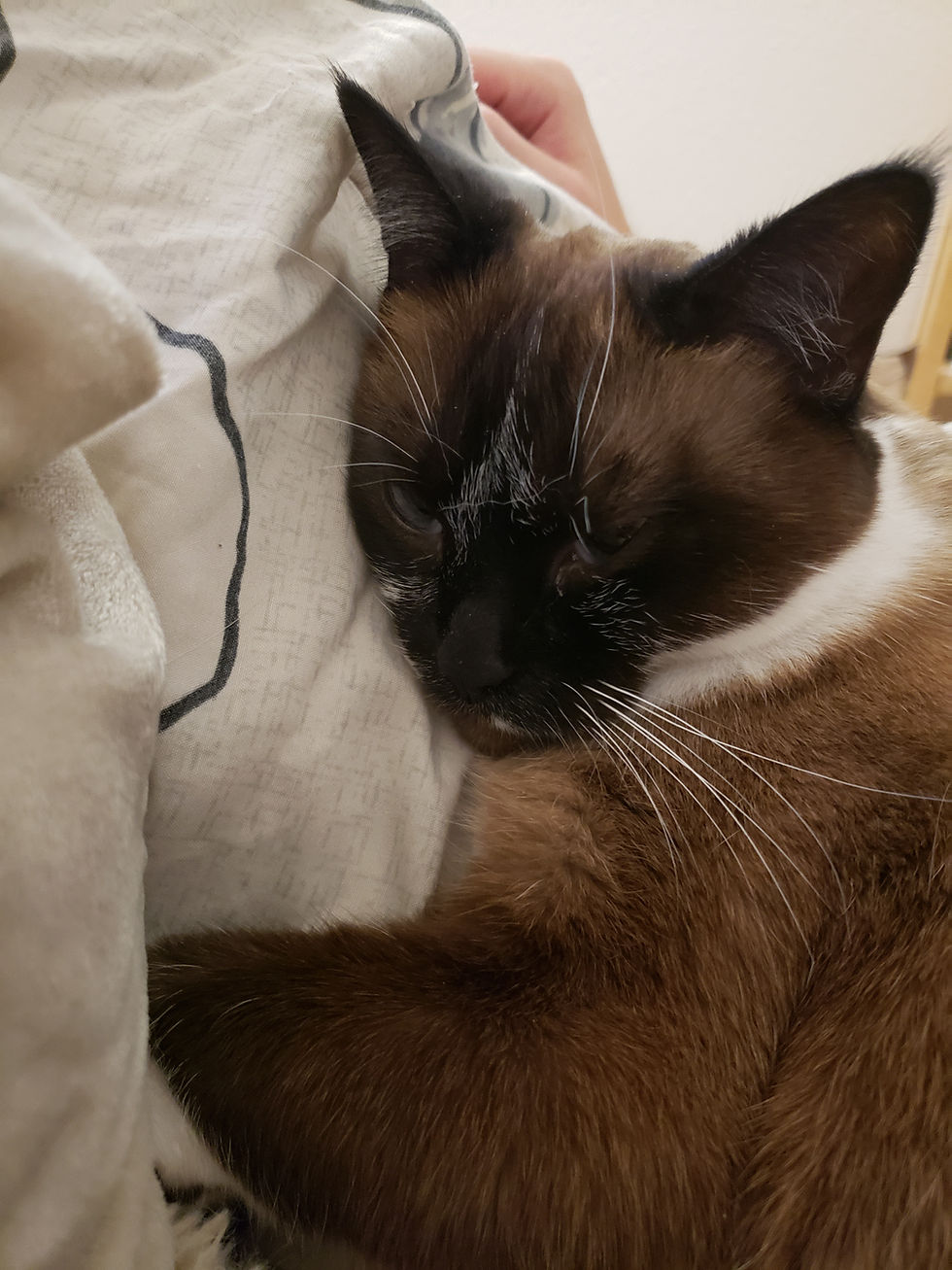
Sherlock has been so happy that we’re home more often. If one of us starts the shower, she barges into the bathroom, jumps up on the toilet seat, and settles in—waiting for us to finish so she can follow wherever we go. It’s adorable. Right now, she’s happily asleep in a new napping spot while she still can.
We’ve been a pretty happy family at home—struggling, but still joyful and doing our best to enjoy life alongside those struggles.
I have to say, the book Running on Empty by Jonice Webb has done wonders for our marriage. It’s not specifically about marriage, but rather about you as individuals—how you view, approach, and experience connection with others. There is a second book focused more on relationships, but I highly recommend starting with the first one.
I know a lot of people recommend great books, but I only want to highly recommend books that truly change your life—ones that go beyond just making you think, and instead help you recognize how deeply they apply to your own experiences. This is one of those books. I think it addresses something that has caused a lot of disconnection and loneliness in our society. Even if you feel like you’re doing well, I’m confident you’ll find something in it that can create a meaningful, positive shift in your life.
Anyway, I think that’s all I have for now. I was planning to dive into more writing, but things got hectic. It’s still on my list—focusing on one question at a time—then eventually releasing the full list for others to reflect on and analyze their own beliefs.
This became more of a priority when I came across a commentary video:
Skyrim Understands Paganism Better Than Modern Pagans by Broken Ruune
It’s an interesting video that caught my attention. You don’t have to watch it—I’m mainly referencing its theme and depth. I may not fully agree with everything said, but there were definitely a few points that felt insightful and worth thinking about.
I only have a basic familiarity with Skyrim, but enough to understand the general idea. What stood out to me was the concept of a fictional world portraying religious practices in ways that differ from modern interpretations. It made me think about how belief systems and understandings can shift over time—sometimes becoming simplified or even redirected entirely. Or how how people's current understanding of 'religion' is heavily influenced by the leading religious practice of their home country. In this case: Christianity. Taking ancient gods and giving them Christ-like attributes, even though the stories from the periods when they were believed to exist are often filled with terror and portray people as little more than insignificant playthings.
For example, feminism has evolved significantly, and there’s a noticeable difference between its earlier definitions and how it’s often interpreted today. Regardless of where someone stands, it’s hard to ignore that there has been a shift. Saying you are feminist today doesn't mean the same thing.
That leads into a question I’ve been reflecting on: What beliefs have we consciously chosen, and what has been passed down or shaped for us?
How much information has been influenced or reframed so that future generations follow a particular direction?
I’m not trying to say what is right or wrong here—but rather asking whether we are truly choosing what we believe, or simply accepting what we’ve been given.
Looking at this through the lens of spiritual conflict, it raises even more questions: How many belief systems were shaped to guide or control groups of people? How often has meaning been altered—intentionally or unintentionally—over time? And if something harmful were presented as good or harmless, would we recognize it? Or would we accept it because of who taught it to us?
That’s the line of thought I’ve been exploring. While many people already know where John and I stand in our beliefs, we’ve had to go through this kind of questioning ourselves—multiple times—especially when reflecting on what we were taught growing up.
In many cases, there was manipulation. At times, authority figures used their influence in ways that weren’t healthy. We were taught to strictly follow certain interpretations of the Bible that weren’t actually present in the text itself—but were instead shaped by how others presented it.
That distinction—between the source and the interpretation—has been a really important realization for us.
I will still stand by the belief that the Bible has never been wrong in my life. The lessons and stories, when understood in context, provide depth and fullness. They should never be taken out of context and applied elsewhere. That’s where many misconceptions came from—costing us years because we blindly trusted what we were taught by our elders.
This ties back into my goal of writing through my beliefs. Over the past twenty years, I’ve spent a lot of time researching topics more deeply—especially ones that felt off but were taught as truth growing up. Later, I discovered many of them were misinterpretations, often because a proper understanding would have contradicted other teachings. When you start to see that, you can almost feel the threads of manipulation that were at play.
So now, as we continue our journey of understanding who we are and what we believe, it’s time to reflect and sift through who we were told we were, who we were shaped to be, and who we truly want to become.
Okay, onto the next video we came across and wanted to share:
The Most Disturbing Planets Ever Found by The Paint Explainer
This video is charmingly made—what looks like it was created in a basic paint program. The topic itself was fun and fascinating, and it went in directions I didn’t expect (and honestly, I’m surprised I hadn’t explored this sooner).
What’s truly incredible is the wide variety and uniqueness of what can exist in our universe. It made me think—if these exoplanets exist with such different materials, movements, cycles, and elements, could they serve as examples or references for what’s possible here on Earth? Could studying them inspire advancements in industries or fields we already have?
I still hold to the idea that each person has unique interests and combinations of skills that drive them toward discovery. For example, imagine a child who loves space and planets, but also has a natural talent for engineering, metallurgy, and even music. Maybe their family background involves understanding temperature and wind patterns.
Now imagine there’s a planet with extreme temperatures, floating alloys, unpredictable winds, and even recorded sounds. That individual—because of both their nature and upbringing—might notice patterns others wouldn’t. Over decades, they could refine their senses and knowledge to the point where they connect those observations into a meaningful discovery.
This is a simplified example, but the point is: there is so much we can learn from the natural world—whether it’s planets, plants, insects, animals, or minerals. And not just within one lifetime, but across generations of shared knowledge.
Which leads into the next idea:
There’s an exciting concept that we may inherit aspects of our ancestors—not just traits like trauma or struggles, but also skills and tendencies. While challenges can be worked through and healed, there’s something compelling about the idea that certain abilities may carry forward through generations.
John and I revisit this idea from time to time. I think I mentioned before that his family background includes trades like milling, baking, brewing, and food storage. You can see how that seems to show up in his natural abilities—he has a strong sense of taste, can adjust recipes intuitively, and has an internal sense of timing (and even smell) for when food is done cooking. These things seem to come easily to him.
For me, those same skills feel almost nonexistent. Interestingly, he also tends to crave certain foods like bread and potatoes, while I lean more toward rice and bread. Potatoes don’t always sit well with me—they feel too heavy for my body.
On the other hand, I seem to have picked up more business-oriented skills, like management and organization. I learn them quickly and even enjoy those types of systems and strategy-based activities in my free time.
This doesn’t prove anything definitively, but it’s something I already feel holds truth. There’s also ongoing research that suggests there may be more to this idea than we once thought.
That brings me to another video:
What Made Jaafar Jackson the ONLY Choice to Play Michael Jackson by Movémon
The video talks about how much of Jaafar Jackson’s ability to portray Michael Jackson may come from inherited traits, combined with growing up closely around him and observing his movements firsthand. There’s a natural familiarity there that goes beyond simple imitation—the resemblance in presence and expression is striking.
I’m curious to keep watching for patterns in stories or research related to this idea.
Found this other video I haven't watched yet, but just a little flag that this research may pop up more with new findings! I'm waiting for a day when I have the mental capacity to watch, remember, and connect information. But feel free to watch it before me!
Genius 10 Year Old's Research Shocks Scientists Around the World By A Curious Birb
Next topic!!
This one touches on something important: sometimes we think we fully understand something—or assume it’s a scam—but we may need to step back and not lean too heavily on our quick judgments or sense of certainty.
Some topics have been studied and developed over decades, with generations of people investing their time and lives into them. So when we dismiss something too quickly, we might be overlooking something worth understanding more deeply.
I’ll admit, I was a bit shocked by the title of this next one and had to find out if it was actually possible:
This Medical Machine costs $18,000. I Took It Personally. By It's Triggy!
Now, I get upset about Big Pharma as much as the next person—maybe even more so, since John and I need medical help frequently and tend to encounter more negative experiences with medical professionals than most. So yes, this topic stirred up some anger in me.
But I also know how clickbait titles are designed to provoke that reaction, so I wanted to hold off and make sure it was actually something worth being upset about—or if it was just trying to make me angry.
I watched the whole video, and yes—I was mad. I didn’t expect it to seem so “easy” to make something like that…but William Osman built an X-ray machine in his garage, and it worked. Keep in mind, he’s someone intelligent enough to have worked for NASA—and left because he found it boring. So he’s clearly very smart, just in a chaotic, “I-need-something-to-channel-this-energy” kind of way.
It wasn’t until I read the comments that something clicked for me.
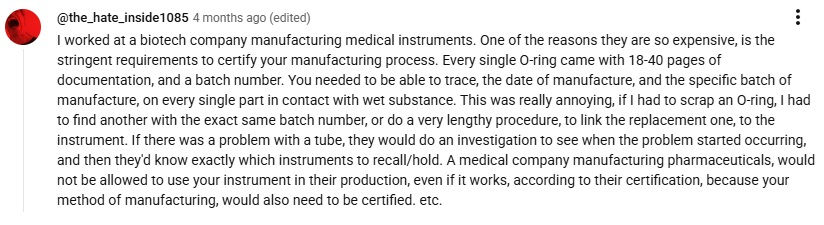
This actually makes sense. We require extremely high standards and detailed regulations for things like rocket ships—so why wouldn’t we have similarly strict standards for medical devices used on hundreds, if not thousands, of people?
So I had to sit back and reflect on my anger for a moment. My reaction wasn’t entirely wrong—but it also wasn’t the full picture. The real point is that there are careful, specific checkpoints in place to ensure devices are safe—not only for patients, but in general use. Downtime or failure in these machines can be costly, not just financially, but in time—especially when lives may depend on them.
Sometimes our emotional reactions aren’t necessary—or at least, they don’t need to control us. Life moves forward whether we react or not, and we don’t need to carry a constant sense of righteous anger—especially when it’s outside the areas where we can actually make an impact.
If we stay angry at everything, we end up unable to do anything. It’s better to choose what truly matters to us—where we can make a difference—and focus our energy there.
Let some of that anger go. We don’t have to fight every battle, but we can still stand firmly for the values we care about. The right people will take on different areas, and shared values will naturally support one another.
I used to get angry very easily—and for understandable reasons—but it was still destructive. It affected me, the people around me, and the future I was trying to build. If I want to move forward, I have to be intentional about what I give my energy to—focusing on things where I can create something positive.
Because when I tear things down, I often end up hurting myself or the people I care about—sometimes without realizing it. But when I help build something up, even if I struggle or fall, there’s a chance someone will be there to help me too. It creates a gentler, more constructive path forward for everyone.
Okay, onto the last video. This one might bring up some conflict—but again, it ties into the same theme I’ve been exploring:
Are the things we were taught actually true, or has there been some level of manipulation?
Most people are familiar with Helen Keller. And I’m not speaking against her as a person—she is absolutely inspirational. But I do have questions about the way her story has been presented.
When John and I tried to recall how we were taught about her growing up, it was always very simplified: a brief story about her childhood, her tutor, and then suddenly she becomes a famous writer traveling the world and meeting important figures. It was usually presented as a short, polished narrative—and then left unquestioned.
There are a few details that continue to stand out to me and raise concerns. You can watch the video or read through the points below that felt significant to me:
The Helen Keller Story Doesn’t Add Up by Elephants in Rooms By Ken LaCorte
Now, a lot of this is speculative—but there are patterns that feel worth questioning. Here are some of the main points that unsettled me and made me wonder whether Helen Keller may have been, in some ways, used or taken advantage of:
Anne Sullivan had no prior teaching experience, especially not with someone who was both deaf and blind.
She had a lot at stake—her reputation and livelihood depended on Helen’s success.
All communication to and from Helen went through Sullivan, giving her complete control over what was conveyed.
Sullivan herself admitted at times that she didn’t fully understand Helen and would fill in gaps.
After Sullivan married, her husband—who was a politically active writer—became involved, and many of Helen’s works passed through them before publication.
They traveled extensively and lived quite comfortably, with Sullivan always acting as Helen’s SOLE interpreter.
Some of the writing attributed to Helen includes vivid visual descriptions, metaphors, and imagery that seem difficult to reconcile with someone who had never experienced sight—suggesting those elements may have been taught or added later.
Helen’s writing style reportedly changed significantly later in life, especially after Sullivan’s death and a change in caretakers.
There are accounts of individuals at the time questioning the authenticity of her abilities.
Some modern educators working with deaf-blind individuals have raised questions about whether her level of achievement is replicable, given neurological development factors.
Her public positions also seemed to shift over time—for example, early advocacy for people with disabilities contrasted with later support of controversial figures associated with active harmful ideologies.
All of this raises a difficult question: how much of what we attribute to Helen Keller came directly from her, and how much may have been shaped—or influenced—by those around her?
Again, I’m not making a definitive claim here. But I do think it’s worth being willing to ask questions, especially about stories we’ve always accepted without much examination.
So I hope you don’t think I’m putting Helen Keller down. What I’m trying to point out is the possibility that someone behind the scenes may have been pulling the strings—how Helen may have been limited to communicating through one, then two, people who potentially had a lot to gain from her fame.
But it raises a bigger question: how many other stories have we been taught in school that might follow a similar pattern? This loosely connects to stories like Britney Spears and other well-known child celebrities—situations where individuals may have been manipulated or controlled by the adults responsible for their care, often for financial or personal gain.
Some of my strongest feelings are toward those who harm or exploit children. Having had to protect children—and myself—from a young age, that reaction runs deep for me. More and more stories are coming out that seemed fine on the surface, but behind the scenes were deeply painful and complex.
Anyway, I didn’t want to end on a heavy note, so here’s something a bit more surprising and fun!
The Time Disney Channel Remade Shows for India by MayooseeXP
I grew up loving Disney Channel—I watched just about every movie and show until around college. After that, my brother mostly took over the TV, and then my younger sister came along, so I shifted more toward YouTube. But during that earlier time, I was definitely watching during what felt like the peak era of Disney Channel content.
So this video came as a complete surprise. Not once—until now (mid-April 2026)—did I realize that some of these shows were actually remade specifically for India! That’s wild.
One of my favorites growing up was The Suite Life of Zack & Cody, so hearing there’s an Indian version makes me really curious. I’d love to see what kinds of changes they made to adapt it for a different audience. And they didn’t just lightly adjust things—they rewrote quite a bit to better fit cultural context. From what I’ve seen, many of these versions were popular in India, often without viewers even knowing about the original American versions.
I definitely recommend watching the video—or at least skimming through parts of it—especially where it highlights the differences between the U.S. versions and the Indian adaptations. It’s fascinating to see how storytelling shifts across cultures.
I do wish they had continued doing this, though I understand how expensive it must be. Still, it feels like there are some shows that could absolutely be worth adapting for different countries.
What kids’ show did you grow up with that you think would work well in another culture?
I think it would be really interesting to create something like Jackie Chan Adventures, but focused on Native American folklore and belief systems. That could be such a fun and meaningful exploration.
Well, that’s everything I have to share for now. Thanks so much for reading and keeping up with what we’re doing!
I really hope to share more updates on our health, as well as more reflections on our beliefs. Most of the writing about beliefs will probably come from me, and John can share where his views differ. That said, we overlap on about 80–90% of what we believe, so it’s fair to say that many of my thoughts reflect his as well. I hope you’ll take a look at a few of those when they come out!
See you next time~
Our adorable girl sleeps in so many new locations!



Comments