
Michelle Miller Health Update
I used to include these in our monthly updates, but things have gotten a bit complex with that. As much as I'd like to avoid dragging people into these more personal matters, These are severe disabilities that cannot be dealt with on their own or ignored. They literally impact everything we do, let alone everything we think about before doing it! This makes these updates important because they give a more rounded picture of what's going on in our lives. I've been meaning to write one of these for a while, so here's one that's been pressing on me for about a month now.
A few months ago, I started taking a new medication, and it has made a significant difference. This medication was recently approved for people with MDD, or Major Depressive Disorder in 2022. I've had persistent major depressive disorder since I was about 11 or 12, which typically doesn't respond well to medications. I've been on over 20 different medications, some of which can be dangerous if taken even once, let alone if you stay on them. But for over 15 years of searching for medications to help, the risks versus the benefits just weren't worth it. I've had to take some strong, fast-acting medications to limit and restrain my suicidality. Going through so much trauma was too much to remain conscious through. Some of those medications, even years later, are still affecting me to this day.
Even with this miraculous medication that I've finally tried, I'm extremely sensitive to it. Typically, medications have a recommended starting dose for people to begin with. I have to start at HALF the lowest dose, or I'll be knocked down for days while my body allows the new chemicals to rebalance themselves internally. Even now, taking just half, I still feel a bit sluggish, and it's difficult to maneuver through my own mind. Think of trying to push forward through very viscous mud. You CAN move through, but that resistance requires quite a bit of muscle power to counteract the push.
I've only been on this medication since around June or July (I've forgotten when I actually started taking it). Just within the last few weeks, I've finally been able to function a bit more clearly, but not by much. I'd like to explain a little about what I've had to deal with, what this medication is doing to help, and what I've lost in exchange for those benefits.
The medication I'm on is called Vraylar, which is also prescribed for people with bipolar disorder back since 2015.
I have symptoms that overlap with those of bipolar disorder, but I am not bipolar. My ADHD processes emotions so quickly that I emotionally react before I realize I've reacted. I'm autistic, so my sensory inputs are, by default, far more or far less sensitive than those of the average person. I've also survived trauma since childhood, making me extra sensitive to the shifts around me that severely impact my internal self-image. There are other issues, too, but generally, the combination of all these things made me switch quickly and overwhelmingly from one emotion to another. Having highs and lows within moments should the external stimuli be present physically or internally imagined in my mind.
These experiences were debilitating. I would wake up instantly the moment my consciousness even TOUCHED the idea that I might be awake. This could happen as early as 3 a.m., with an inability to relax my muscles enough to fall back asleep.
Oh, I forgot to mention that the hypervigilance and frequently tense muscles meant I was in so much pain that I developed severe back pain. It was bad enough that I needed ablations to manage it. For those who don't know what ablations are, they involve inserting needles into your spine and sending electrical currents through them to burn the ends of your nerves. This limits the number of pain signals that are constantly being fired. The procedure provided temporary relief for, at most, two weeks. They try to say it gives you a few months up to 6 months of relief...that was never what I experienced. That's how severe my pain was from all the instant emotional connections my brain was making and the physical shifting that it was connected to.
Going back to waking up in the morning, my mind would immediately run through everything I needed to do that day, what I hadn't done the previous day that needed to be added to the list, my worries, intrusive thoughts, and so much more. Everything would be flying through my mind at once. This would use up an entire day's worth of energy in about 20 minutes of being awake. It left me physically fatigued before I was even able to get out of bed.
Sometimes, this level of fatigue happened before I even woke up. So picture this...
You have a demanding job that insists you stay on your feet for your entire shift. As soon as you walk in, you're briefed on what you need to work on immediately. Then you jump right into it all, trying to get as much done as possible. Time flies by because there's just too much going on and too much on your plate. You're not even sure you'll be able to make a dent in the workload by the end of your shift! But you keep at it, pushing yourself and doing your best. Still on your feet, mind you, rushing from place to place.
Then comes your break, and you think, "I can finally recover!" But after working for four hours, your break ends up being spent dealing with an emergency that eats up those precious moments of relaxation. It's back to the grind as your break or lunch ends. You keep going, feeling the strain building. The day moves along, the pile of work doesn't look any smaller, and, in fact, you need to pick up the pace. You keep going until the end of your shift, even staying a couple of minutes late to catch the next person up.
Now you're late getting home, but you're still trying your best with what little energy you have left. With so much required of you, you're surprised you had enough energy not to collapse. Perhaps you're borrowing energy from tomorrow? You'll feel it then, won't you?
So you head home, your mind still racing with everything that happened that day. You rush to get everything settled and put away before you're finally able to sit down in your big, favorite chair and rest.
Once you do, you feel your muscles buzzing, begging for rest. The chair feels comfortable enough because it means you don't have to move, but not comfortable enough to make up for how exhausted and in pain you are. The energy accumulated throughout the day is still rolling around inside you. The pain from being on your feet all day is clawing up your legs, causing deep aches. You take a deep breath and let it out, thinking that this pain is the result of a day well done.
From that story, did you feel or recognize that level of busyness? The amount of physical pain that comes from having to be on your feet? The amount of attention frequently required of you across multiple projects or tasks, almost nonstop?
This was my daily experience. In fact, that was usually my NIGHT. Those would be my nightmares that I would relive every night. Panicked and struggling to save a world where the people just didn't care if they perished. I'd wake up with those aches and pains, along with that level of fatigue, first thing every morning. I had to deal with this for over two years straight.
Some mornings, my muscles were in so much pain that I literally couldn't use the muscles in my torso. My husband had to give me back massages to help everything reconnect, then help me roll out of bed. I couldn't hold objects because the nerve pain would make my hands "glitch," causing me to drop whatever I was holding.
When I say this medication has made a significant difference in helping with THIS level of severe emotional turmoil and the physical exhaustion that comes with it, I mean it. It's been amazing. And this is only ONE area in which it has helped me.
B
ut all of this comes with a cost. I'm noticing that I've been losing a few functions, particularly when it comes to communicating while socializing and managing my memory. Those are the main areas that have been impacted.
1) Socializing
I'm having trouble coming up with things to say or remembering conversations I've had with people. For some reason, I used to know which questions to ask or which topics to bring up when I was around others, but this ability has been muted by the medication.
The skills I learned under distress are no longer as accessible, and I have to relearn how to socialize. So please be patient with me if you see me struggling to find the right words.
2) Memory Loss
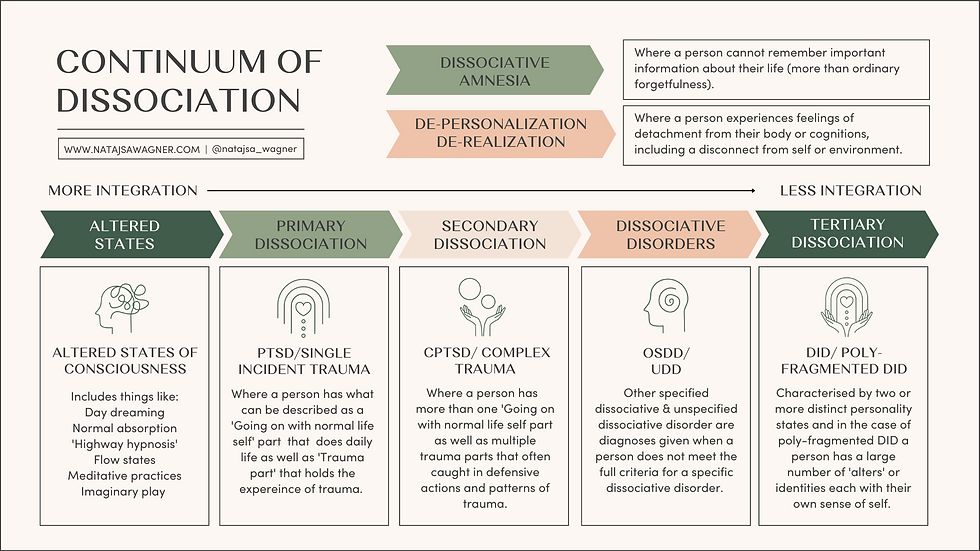
Although I already struggled with memory because of trauma and dissociation, it's gotten worse. I used to overplan or prepare for events, but now I'm forgetting more and more things or leaving items behind. Normally, it's fine, but some of the things I'm forgetting now are rather important.
My brain feels so sluggish that the effort of moving from one thought to the next means many ideas get lost along the way. John tries to help, but his memory is worse than mine, and he relies on me to remember everything. I wouldn't rely too heavily on his help in this area. He tries, but trauma can lock memory processing away, so it's not his fault.
This also affects TIME and how I process and experience it.
It's not an entirely unbearable loss, but it will and does affect my ability to function. This also means I'll struggle to get things done in a timely manner. I can only plan ahead if I have enough peaceful time to work through things slowly.
I think that's a good start toward explaining what I'm currently going through. This is just one layer of what I'm struggling with and working on. I don't want to go into too much detail here. My own doctors can barely keep up with the number of things I'm working on, so I wouldn't expect anyone reading my blog to be willing to delve into it too deeply!
Thanks for reading and I hope you look forward to our next post! =)



Comments